-
No referral or doctor's note is needed to book with me— that goes for Osteopathy, Physiotherapy, and Pelvic Floor Physiotherapy.
One thing worth checking, though: some insurance plans do require a referral in order to reimburse your visits. Since every plan is a little different, I recommend reaching out to your insurance provider directly to confirm what they need.
-
Yes! Osteopathy, Physiotherapy, and Pelvic Floor Physiotherapy are commonly covered under Extended Health Benefit plans.
That said, coverage can vary depending on your specific policy, so it's always worth a quick check with your provider beforehand.
After your visit, you'll receive a detailed receipt that you can submit directly to your insurance for reimbursement.
-
I don't offer direct billing at this time — and it's actually a deliberate choice. Stepping away from that process allows us to keep appointments unhurried and focused entirely on you.
Payment is due at the time of your visit, and you'll receive a detailed receipt to submit to your insurance provider for reimbursement.
-
I accept credit card and cash. Payment is due at the time of your visit.
-
I kindly ask for at least 48 hours' notice if you need to cancel or reschedule. Appointments cancelled with less than 48 hours' notice, or missed appointments, will be charged the full appointment fee.
I truly appreciate your understanding — it helps us keep things running smoothly and ensures that appointment time can go to someone who needs it.
-
I’m not registered with the Workplace Safety and Insurance Board (WSIB), so visits cannot be billed through WSIB.
If you have Extended Health Benefits, you may still be able to submit your visits through your private insurance.
-
I'm not registered with Health Claims for Auto Insurance (HCAI), so I'm unable to bill directly for motor vehicle accident (MVA) claims.
If you have Extended Health Benefits, I'm happy to explore those options with you.
General FAQs
Osteopathy FAQs
-
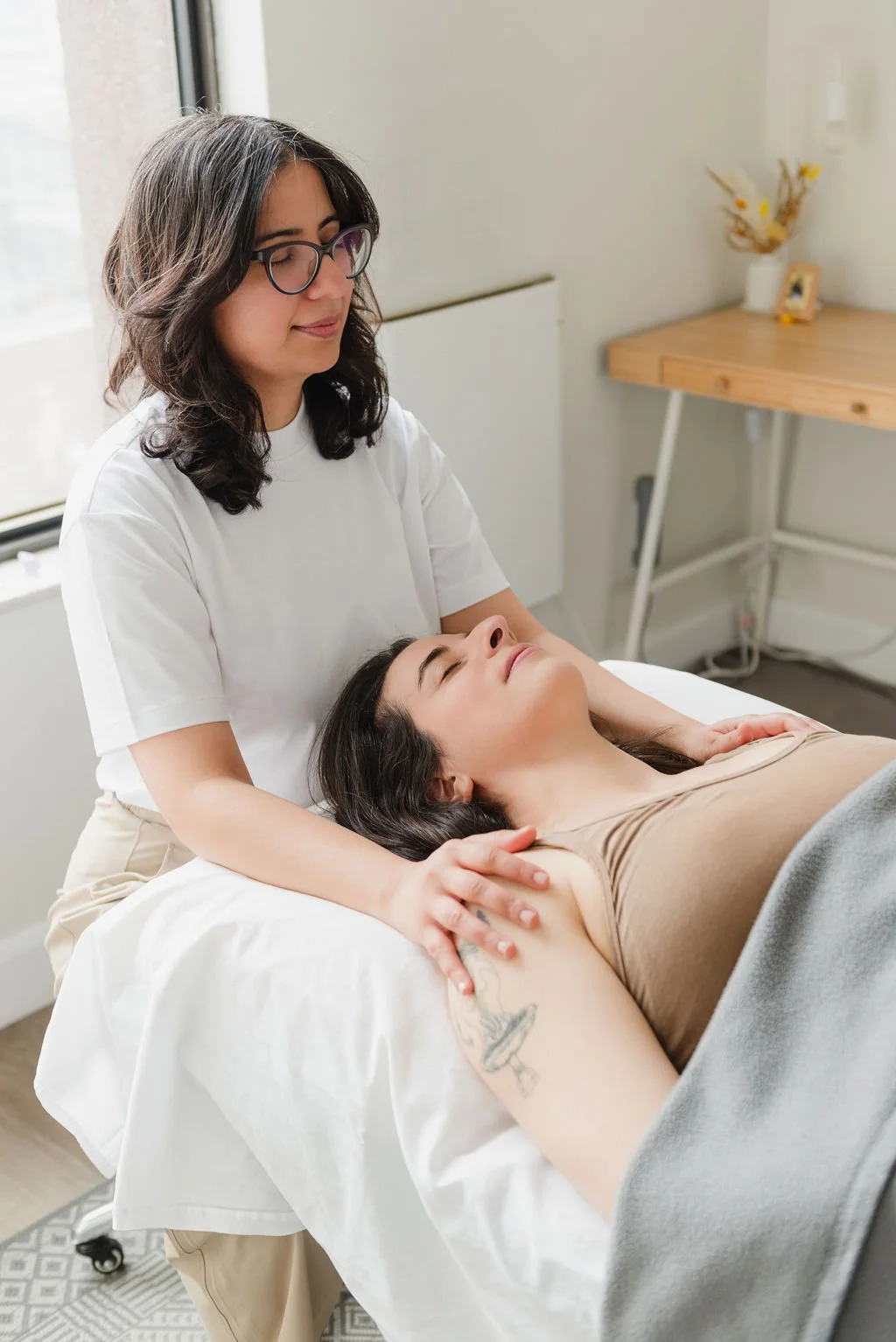
Your first visit begins with a conversation — we'll talk through your health history, current concerns, lifestyle, and goals. This helps me understand how your body has been adapting over time.
From there, I'll move into a gentle, hands-on assessment followed by treatment tailored specifically to you. There's always time to ask questions along the way, so you'll never feel rushed or left wondering what's happening.
-
Comfortable, loose-fitting clothing is best — something you can move easily in. Treatment is typically done fully clothed, so no need to worry about changing.
If you have any relevant medical reports or imaging, you're welcome to bring them along, though they're not required.
-
Everyone responds a little differently, and that's completely normal. It's common to feel relaxed or tired afterward, and some people notice mild soreness — similar to how you might feel after a good workout. Over the next 1–3 days, you may notice shifts as your body integrates the treatment.
Light movement like walking is encouraged, while high-intensity activity is best avoided during that time.
-
Everybody is different — your history, lifestyle, and how your body responds all play a role. After your first visit, I'll typically recommend a follow-up to check in on your progress.
Many people begin to notice improvement within 3–6 visits, though everyone's journey looks a little different.
-
Early on, visits are often a little closer together to support your body through change. As things stabilize, we'll space sessions out further, always guided by how you're feeling, your goals, and what makes sense for you.
It's something we figure out together as your care progresses, not a set schedule decided in advance.
Physiotherapy FAQs
-
Your first visit begins with a conversation — we'll talk through your health history, current concerns, lifestyle, and goals. This helps me understand how your body has been adapting over time.
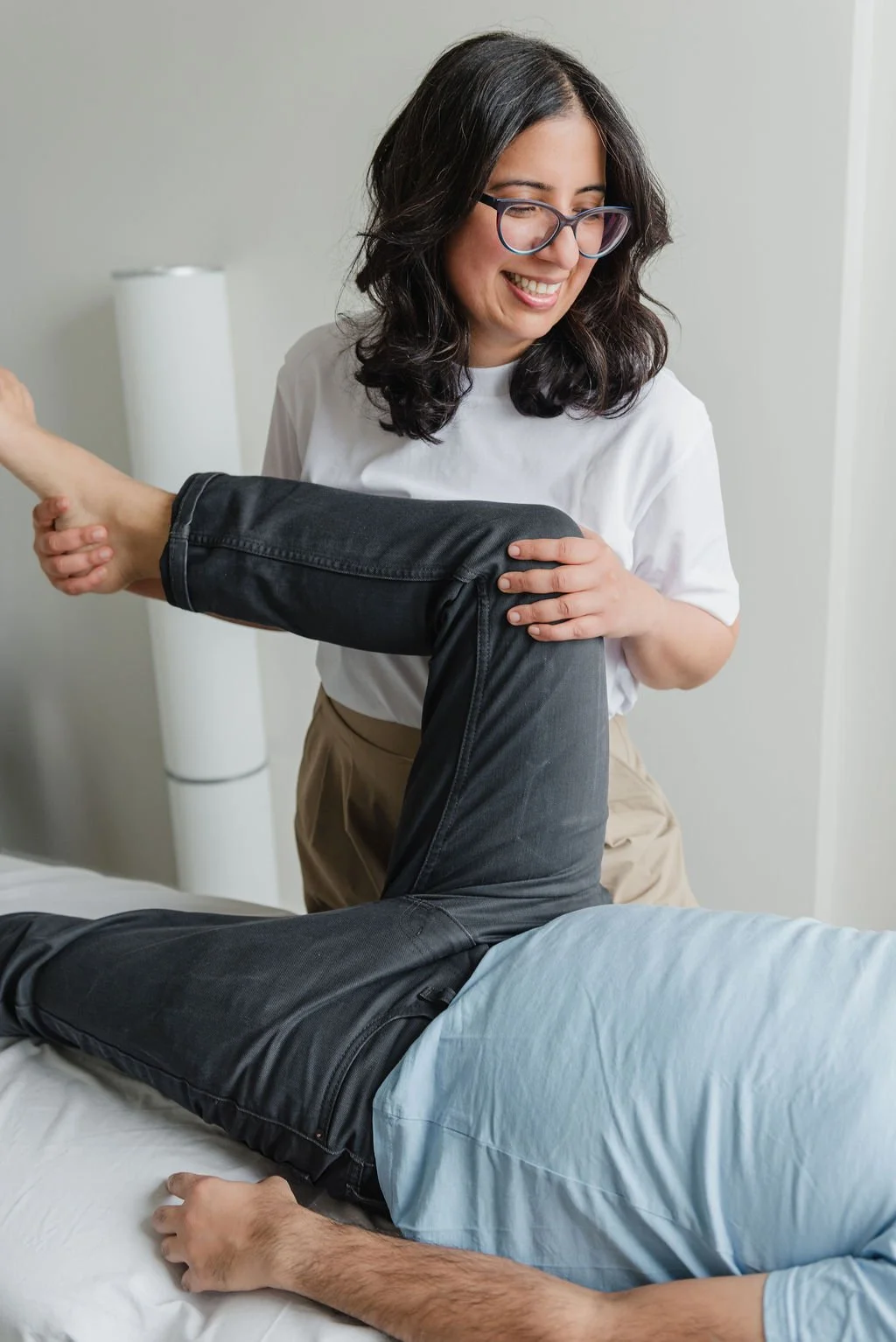
From there, I'll move into a comprehensive assessment, which may include a look at your symptoms, movement and pain patterns, strength, joint mobility, and nerve function — as well as any relevant imaging, if you have it.
Whenever possible, I like to leave time within that first visit for treatment too. That might include hands-on techniques, guided exercises, or practical tips to help you manage symptoms and move with more confidence.
-
Comfortable, loose-fitting clothing works best — something that allows you to move freely through your shoulders, hips, knees, and spine. This helps me get a clear picture of how you're moving during the assessment.
For footwear, supportive sneakers or running shoes are ideal since you may be doing some light exercises. Shoes that are easy to slip off are a bonus, as you may be asked to remove them during the session.
If you have any relevant medical reports or imaging, you're welcome to bring them along — though they're not required.
-
Physiotherapy is meant to help you feel better, not worse. As your body regains movement and strength, you may notice some brief soreness or shifts in symptoms. This is a normal and expected part of the healing process.
We'll work together to make sense of what you're feeling, and adjustments will always be made with your comfort in mind. Recovery isn't always a straight line, but the goal is lasting relief and a confident return to the activities that matter to you.
-
It's completely normal to experience some mild, temporary side effects as your body adjusts to new movements and therapy. You might notice muscle soreness, fatigue, or stiffness in the treated area — these usually resolve within 24 to 48 hours.
-
Everybody is different — your history, lifestyle, and how you respond to treatment all play a role. Each session is one hour long, and appointments are spaced to give you time to practice and integrate your exercises before the next visit. After your initial assessment, I'll typically recommend a follow-up to check in on your progress.
Many people begin to notice improvement within 3–4 sessions, though everyone's journey looks a little different.
-
Early on, visits are often a little closer together to support your body through change. As things stabilize, we'll space sessions out further — always guided by how you're feeling, your goals, and what makes sense for you.
It's something we figure out together as your care progresses, not a set schedule decided in advance.
Pelvic Floor Physiotherapy FAQs
-
Your first visit begins with a detailed conversation about your health history. This is a safe, open space to talk through things like bowel and bladder function, pain or discomfort with intercourse, pregnancy and delivery history, activity and exercise habits, sleep, diet, hydration, and your overall goals for treatment.
I'll take time to explain how Pelvic Floor Physiotherapy works, what the assessment involves, and how a treatment plan comes together from the findings — so you always know what to expect before we move forward.
From there, a physical assessment will follow, including a look at general movement patterns, core function, and the low back, hips, and pelvis.
With your informed consent, an internal pelvic floor assessment may also be performed. This can involve gentle vaginal and/or rectal palpation to evaluate pelvic organ position, muscle function, and pelvic floor coordination.
Finally, we'll go over the findings together and I'll put together a personalized treatment plan — including exercises to help you move toward your goals.
-
Not at all — and please don't let this be the thing that holds you back from booking!
An internal exam is optional. Your care always happens with your consent, and the decision is entirely yours.
The reason an internal exam is recommended is that many pelvic floor muscles sit internally and can't be fully assessed from the outside. When helpful, an exam may be done vaginally or rectally to better understand how those muscles are functioning.
If it's not something you're comfortable with or ready for, we'll talk through other options together.
-
Absolutely — there's no need to reschedule. Pelvic floor assessment and treatment can absolutely be performed during menstruation, and hormonal changes around this time can actually make an assessment quite useful.
If you'd prefer to skip the internal portion while menstruating, that's completely fine — we can focus on external work and movement instead. And if you'd rather reschedule altogether, just give at least 48 hours' notice and we'll find a time that works better for you.
-
If you're experiencing any symptoms, it's best to come in as soon as possible. Things to watch for include pain with intercourse, waking more than three times per night to urinate, concerns about diastasis, or any urinary leakage.
If you're symptom-free, the recommended window for your first prenatal visit is between weeks 12-14. This gives us a chance to establish a baseline for your pelvic floor, catch anything you may not have noticed, and begin labour preparation exercises to support a smoother delivery.
Internal assessment and treatment are safe during a healthy pregnancy. For high-risk pregnancies or those with medical restrictions, internal assessment may be deferred — though external physiotherapy is always still an option.
-
As soon as possible is generally best — though timing does depend on your specific concerns and the type of delivery you had.
After a vaginal delivery or episiotomy, a little time may be needed for healing before internal work can begin. After a Caesarean, waiting around 4–6 weeks for incision healing is usually recommended before abdominal or scar work.
That said, even during that early window, there's plenty we can do to help relieve pain and restore function safely — so don't wait to reach out.
-
Never. Whether you're a few weeks, several months, or even years postpartum, it's never too late to start — the body continues to respond to rehabilitation at any stage.
Treatment can help with incontinence, pain, prolapse, and core weakness, supporting healing, restoring function, and helping you feel stronger and more confident in your body.
-
Pelvic floor physiotherapy is not meant to be painful. Depending on the sensitivity of your tissues, you may notice some mild discomfort at times — but gentle techniques are always used, and your comfort is the priority.
Communication is continuous throughout your session, so you're never left wondering, and adjustments are always made the moment you need them.
-
Everybody is different — the number of sessions depends on the severity and duration of your condition, as well as how your body responds to treatment. Each session is typically one hour long, and appointments are spaced to give you time to practice and integrate your exercises before the next visit.
Most people begin to notice improvement within 4–6 weeks of starting treatment, though progress can be faster or slower depending on the person. As you move forward, we’ll track your progress and adapt your plan along the way to make sure it continues to meet your needs and goals.

Ready for full vitality, mobility and ease?
-
-
For first-time patients, or those returning with a new concern, we begin with a 75-minute assessment and treatment session. This gives us time to explore your history, understand your concerns, identify contributing factors, and create a plan tailored to you.
-
Follow-up sessions are typically 60 minutes, allowing us to continue your care, track your progress, and adjust your treatment plan as needed.